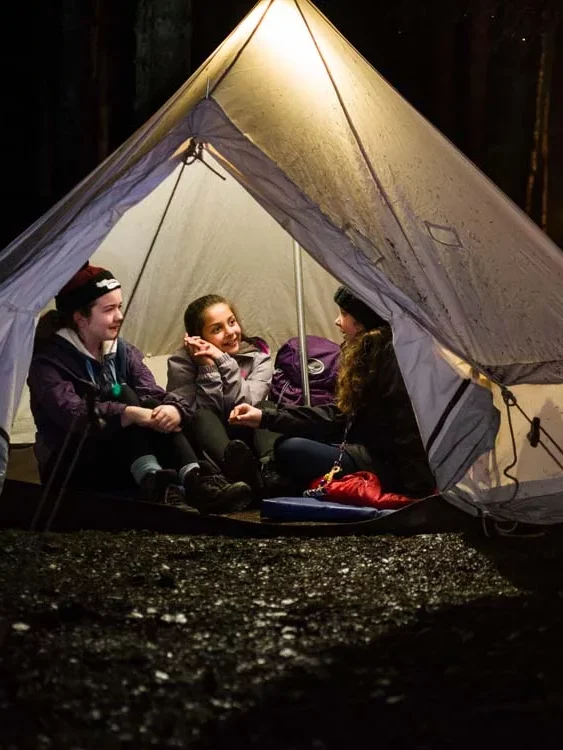
Adventurous Activities
We’re known for our love of adventure, which is why the ideal Scout programme includes a healthy dose of thrill seeking, whether you’re outside or in.
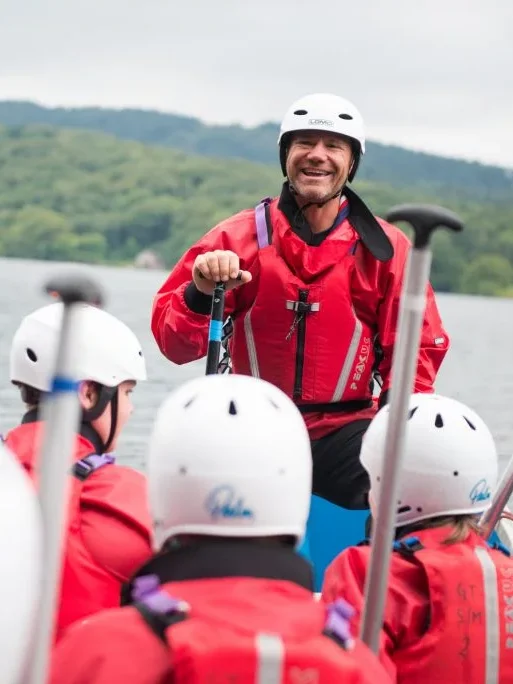
Adult groups and Activities
Planning an activity for group of adults as part of an organised Scout Activity? Make sure you submit a notification and follow all the guidance from The Scouts too!
Adult to young people ratios
Ratios for online Scouting
There must be at least two adults present at all times during any online activity. Ideally both adults should be Scout volunteers, but you can use a parent rota to support as you would normally do. Young people must never be left in a one-to-one situation with an adult. This protects us all and underlines our commitment to effective safeguarding. Learn more about staying safe online
Squirrels
Indoors: One adult to six Squirrels, plus the Leader in charge. A minimum of three adults regardless of the number of Squirrels attending.
Outdoor Activities held away from the usual meeting place: One adult to four Squirrels, plus the Leader in charge. A minimum of three adults regardless of the number of Squirrels attending.
Nights away experiences (led by Nights Away Permit Holder): One adult to four Squirrels, plus the Leader in charge. Minimum of three adults must be present.
Beavers
Indoors: Minimum of two adults present
Outdoor Activities held away from the usual meeting place: One adult to six Beavers, plus the Leader in charge
Nights away experiences (led by Nights Away Permit Holder): One adult to six Beavers, plus the Leader in charge. Minimum of two adults must be present overnight.
Cubs
Indoors: Minimum of two adults present
Outdoor activities held away from the usual meeting place: One adult to eight Cubs, plus the Leader in charge
Nights away experiences (led by Nights Away Permit Holder): One adult to eight Cubs, plus the Leader in charge. Minimum of two adults must be present overnight.
Scouts
Indoors: Minimum of two adults present
Outdoor activities held away from the usual meeting place: The recommended minimum ratio for outdoor activities held away from the usual meeting place is one adult or helper to 12 Scouts. As a minimum, there must be two adults or helpers present at least one of whom must have a full adult appointment with the Troop.
Nights away experiences (led by Nights Away Permit Holder): One adult to twelve Scouts. Minimum of two adults must be present overnight
It’s possible for young people to hold a Nights Away Event Passport, which allows them to run a nights away event for their peers, without adults present. In which case, the ratios will not apply.
Explorers
For all Explorer Scout regular indoor meetings a minimum of two adults must be present and a minimum of two adults for all nights away activities.
For all meetings and activities, leaders should assess the risk and make sure that there are enough adults present to keep everything safe while the section is running. This risk assessment may mean that more adults are needed than the minimum ratios.
It’s possible for young people to hold a Nights Away Event Passport, which allows them to run a nights away event for their peers, without adults present. In which case, the ratios will not apply.
Can a young person hold a permit?
Yes, there is no minimum age to hold a permit, whether personal, leadership or supervisory. Perhaps the most typical example is where expeditions are being conducted. However, in these circumstances, the approving Lead Volunteer may place restrictions on time, requiring perhaps that a responsible adult conducts daily visual checks on progress
Can we use external providers?
Yes. You can use external activity providers as long as they have the correct qualifications and level of public liability insurance. POR 9.9
You may find that certain activities require that you only use providers who are either AALA or Adventure Mark Accredited.
Before booking an activity always consult the Scouts website.
Do I need a permit?
For a full list of which activities require a permit please consult the Scouts website.
Do I need a risk assessment?
Yes all Scout Activities including nights away and adventurous activities require a written risk assessment POR 9.4
For more support on writing a risk assessment check out the Scouts website
Does my permit need renewing?
Yes. All Activity and Nights Away permits periodically need renewing. The maximum a permit can be granted for by the District Lead Volunteer is 5 years. Please ensure you check My Membership regularly and put a reminder in your diary.
Nights Away
To renew a nights away permit you will need to complete a renewal and upload a log book in the Scouts Membership System
Activity Permits
To renew an activity permit you will need to complete a renewal and upload a log book in the Scouts Membership System
Emergencies and reporting
It is important to know what to do in an emergency and for all involved in an activity to be on the same page with what is going to happen. It is also important to have clear processes for reporting of incidents, both locally, nationally and where appropriate to other agencies.
Call UK Headquarters immediately (24 hours) on 0345 300 1818 or +44 20 8433 7100 if:
- A fatality occurs as a consequence of a Scouting activity
- A likely hospital stay of 3 or more days is required
- Multiple casualties from a reportable incident with overnight hospitalisation
- Collapse of a significant structure (whether injury was suffered or not)
In an emergency, follow these steps and guidance
Step 1: Assess the danger to yourself and others
Before you help anyone, you’ve got to make sure you’re safe. If needed, stop the activity to prevent further harm.
Where are we?
- Is there something dangerous nearby?
- Do we need to move people to a safer place first?
What’s dangerous?
- Are there any hidden dangers? For example, broken glass, or something slippery?
- Are there other things that could hurt you or anyone else trying to help?
Step 2: Assess/Administer first aid
- Do you need extra help or expertise?
- If yes, raise the alarm and get help.
- Continue to administer first aid as appropriate.
- Prioritise casualty care based on injuries.
- Try to note down what you do, if possible, including times.
Step 3: Raise the alarm and get help
- Contact the emergency services for help as soon as possible. Gather details to share with them.
- Find out your exact location (#W3W/OS Grid Ref), who you are with (including numbers), and get someone to guide emergency services to you.
Step 4: Keep everyone safe, well, and updated
- Look after yourself.
- Keep focused on the other people and their safety and wellbeing. Work together with your team to do this.
- Keep emergency services and your designated InTouch contact* updated on any developments, including when the situation has been resolved.
* This could be your emergency contact for international trips, your Group or District Lead Volunteer, or a pre-arranged third-party individual.
Step 5: Reporting
- Call UK Headquarters as described for incidents shown overleaf.
Inform and report to your Group/District Lead Volunteer using your local reporting processes. - Report to UK Headquarters at the earliest opportunity for near misses and reportable incidents – scouts.org.uk/safetyreporting.
- Notify external agencies as soon as possible (supported by UK Headquarters) about the incident, where applicable.
Key points
- Do keep a record of any actions and communications, including details of others who may have seen what happened.
- Do keep calm and ask for support where needed. Don’t try to handle things on your own.
- If appropriate, take pictures of the location sensitively to help record what happened. This will help you remember the details and assist with learning.
- Don’t be concerned about establishing fault.
- Do refer all news and social media posts to the UK Duty Officer and seek support before talking to the media by calling UK Headquarters.
- Don’t initiate contact with the news media or post on social media (and discourage others from doing so).
- For any Safeguarding concerns, follow the Safeguarding Code of Conduct for Adults (Yellow Card).
Local reporting and what to do
- Inform your Lead Volunteer. Get in touch with your Group or District Lead Volunteer as soon as possible.
- Record what happened. Record the key facts clearly and accurately. Write them down or take photos or videos, if appropriate.
- Keep the records safe. They may be used to support safety learning reviews or be requested after the incident.
What Activities can Scouts do?
Scouts can do nearly all activities with the exception of those which are banned including:
- towing of inflatables behind powered watercraft, such as banana boating
- bungee jumping
- hitch hiking
- knife throwing
- archery tag and other combat style archery activities
There are over 100 activities in the programme.
There are also many opportunities for members to take part in activities which are not specifically covered in the activity rules. Where an activity is not covered by any other rules the Leader in Charge must:
- assess the risks involved, document and communicate this to all involved
- ensure all members’ physical and/or emotional well-being can meet the requirements of the activity
- ensure that all equipment used fits the participants and is suitable for the activity
- obtain the approval of the relevant District Lead Volunteer, or their nominee.
What are personal activity permits?
Personal activity permits are a type of permit that recognises a young person’s ability to safely take part in an adventurous activity without the need for supervision from others.
Unlike a a leadership or supervisory permit which allows you to lead an activity for other people. A personal permit only allows you to carry out the activity for yourself, not to lead anyone else. So you can only take part in the activity with others holding personal activity permits.
There is no minimum age to gain a permit (as there isn’t for leadership and supervisory permits). It is based on the technical skills and personal suitability of the individual. However, personal permits have no use once someone is 18 as they then come under the rules of adult groups in adventurous activities.
What info should I include in an Out of HQ Notification Email?
Where activities do not require an Adventurous Activity Notification we ask that for all meetings taking outside of the normal meeting time or venue that you email the district team to advise us of this. The reason we ask this is because we love hearing about all the fantastic things you get up to and it helps should an emergency arise.
This email does not need to particularly long or detailed but should include:
- What you are doing
- Where you are going
- When you are going (date and time)
- How you are getting there
- Who is the leader in charge
- Approx size of the group i.e. is it multiple sections, the whole section or just a small group?
- How to get hold of you in an emergency and your InTouch system
This can be emailed to dlv@eastscarsdalescouts.org.uk or via whatsapp.
What information do I need for approval?
Before you complete an activity notification, you will need to ensure you have all the information about the activity at hand.
General Information
- Name of Group(s) taking part
- Section(s) that apply
- Date the activity starts and ends
- Is the event recurring. i.e. an activity/course/badge taking place over several days/weeks where the participants, venue and activity provider/permit holder is expected to remain the same? (summer kayaking course for example)
- Location of activity (this can be an address, latitude and longitude, grid reference or description of the route)
Activity Detail
- Approximate number of young people
- Approximate number of adults
- Approximate number of distinct separate ‘parties’ or ‘groups’
- The activity (if not listed select other)
- If applicable what classification of terrain/waters the activity is taking place
- Land Activities (Terrains)
- Water Activities (Classes)
- If applicable for the activity, confirmation that an additional notification to HQ has been submitted.
- If a shooting activity, confirmation that parental permission has been sought and that each young person taking part is not excluded under the Firearms Act 1968 – Section 21.
- Whether the activity is being run by someone inside or outside of Scouting.
Internal / External Activity Detail
- Name of the person leading the event/activity
- If a member of the Scout Association, their membership number
- Their phone number
- Their email address
- If an internal activity and applicable, Names and Membership Numbers for any permit holders. (this can be typed or uploaded as a spreadsheet or PDF.)
- If an external activity
- The name of the provider/company
- Their contact details
- Relevant qualifications
- Do they have AALA or Adventure Mark Accreditation?
- Do they have public liability insurance?
- Will parents be required to sign any waivers?
Planning and Approval Checklist
- Your InTouch process (http://members.scouts.org.uk/FS120075)
- This should consider:
- How Leaders will communicate with one another?
- How Leaders and parents will communicate?
- How participants and parents will communicate?
- It is no longer a requirement to use a Home Contact. However, if you choose to use one they must have a valid DBS and it is best practice that they are not a relative of anyone on the activity. As the individual will be handling personal and sensitive information please also ensure they have completed the Scout GDPR
training.
- This should consider:
- A copy of the risk assessment for the activity
- Declare that, “I will ensure that all hazards and the steps required to mitigate them are sufficiently communicated to both the adults and young people involved in the activity.”
- Declare that, “I will ensure all equipment used fits the participants and is suitable for the activity.”
- Declare that, “I can confirm that the GSL, DESC or ASU Manager is aware of this event taking place.”
What is InTouch?
InTouch is the system that helps you to communicate at all Scout activities and events. It’s flexible and lets Units, Groups and Sections work out the best way to keep in touch during these activities.
At any Scouting activity, you will need to make sure that you have an InTouch system in place (POR 9.3). This is to make sure that:
- everyone involved knows how Leaders, participants and people not at the event will communicate
- you have all of the details of who is at the event just in case something goes wrong, and you have a system in place in case of an emergency.
This system is likely to be different depending on what activity or event you are running, and the needs of who will be there. An InTouch system is important so that everyone knows of the process for every Scouting event.
Who do I need to notify / When do I need approval?
Last updated: 26 January 2024
- Group Lead Volunteers are responsible for authorising all activities that take place in Squirrel, Beaver, Cub and Scout sections or for adults in their Group (with the exception of those mentioned elsewhere in this document). Group Lead Volunteers* will need to see and consider every section’s programme and section teams have a responsibility to ensure Online Scout Manager is kept up to date in good time with sufficient detail including risk assessments.
- The 14-24 Team Leader is responsible for authorising all activities that take place in Explorer Scout and Network Units or for adults in their Team/Sub Teams (with the exception of those mentioned elsewhere in this document). The 14-24 Team Leader* will need to see and consider every Unit’s programme. Explorer section teams have a responsibility to ensure Online Scout Manager is kept up to date in good time with sufficient detail including risk assessments.
- The relevant District Team Leader is responsible for authorising all activities organised by District Teams or Sub Teams for young people or adults (with the exception of those mentioned elsewhere in this document). The relevant Team Leader* will need to see plans and risk assessments for the activity. The relevant Team Leader will need to be aware of all activity taking place especially in regard to lone working.
- If, in any instance, a Group Lead Volunteer, the District 14 – 24 Team Leader or relevant District Team Leader is unsure whether to authorise a particular activity, they must discuss it with the District Lead Volunteer or their delegate.
- In any of the following circumstances an Adventurous Activity Notification must be submitted via https://eastscarsdalescouts.org/aan to ensure all the information provided on the form complies with the requirements for that particular activity. Once notified, the District Lead Volunteer will seek appropriate advice on suitability ahead of approving the activity to take place:
- In the opinion of the Group Lead Volunteer/14-24 Team Leader/Relevant District Team Leader, the activity presents a greater risk to participants than ‘general’ activities. For example: a hike, bike ride or other adventurous activity, even if it takes place in Terrain/Environment 0 or does not require a permit (see POR 9.1, FS120426, FS120422).
- The activity is provided by an External Provider, Centre or Instructor (see POR 9.6, FS120086).
- The activity requires a leader with an activity permit (incl. activities in “Specialist Terrain”).
- The activity requires additional third party insurance (Factsheet POR 9.6) e.g. Motorsports.
- The activity requires a notification to HQ e.g. Air Activities.
- The activity is classed as a High ropes activity (see POR 9.12.5, FS120423).
- The activity takes place on or near bodies of water (including class C FS120623 and swimming pools FS120620).
- The activity involves a public performance e.g. a Gangshow (see POR 9.5)
For all Activities that meet the criteria for an Activity Notification (AAN), the information required should be with the District Lead Volunteer (or appointee) seven days before the event (in normal circumstances).
The event must not go ahead until the Lead Volunteer (or their nominee) has confirmed their approval. Should significant changes be made to the plans for the Activity, the Approver must be notified by the Event Leader or Permit Holder usually by means of a phone call.
Where activities do not require an Adventurous Activity Notification we ask that for all meetings taking outside of the normal meeting time or venue that you email the district team to advise us of this. The reason we ask this is because we love hearing about all the fantastic things you get up to and it helps should an emergency arise. For advice on what to include see the “What info should I include in an Out of HQ Courtesy Email?”.
Approval of activities will be discussed at District Leadership Team meetings to ensure that everyone is comfortable with the process outlined above and applying consistency, also providing an opportunity for the system to be reviewed and amended as appropriate.
Please consult https://scouts.org.uk/a-z/, POR chapter 9 and general activity guidance for advice and rules on delivering activities.
*In the absence of either a Group Lead Volunteer/14-24 Team Leader/Relevant District Team Leader then they are replaced by the District Lead Volunteer.
Adventurous Activity Training
With so many activities available within Scouting, we need to ensure we continue to provide training and assessment opportunities for our members, so they can gain the skills required to run these activities safely. Are you interested in gaining a permit or qualification which allows you to run an adventurous activity?
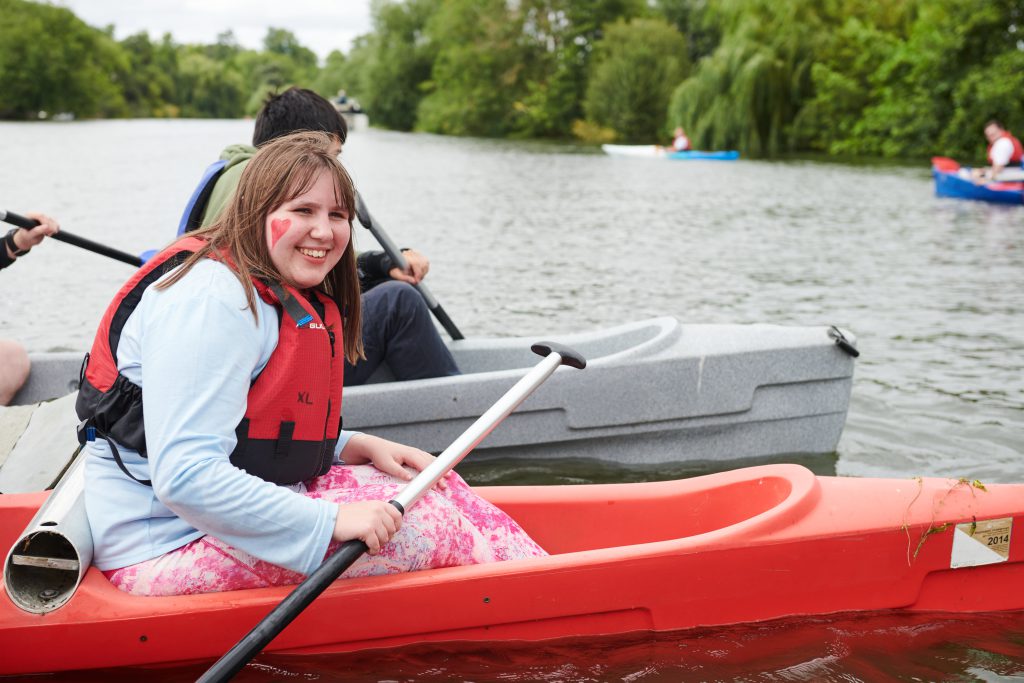
Nights Away
Nights away or residential events help young people to become resilient. Whether it’s camping, hostelling, sleepovers or bivouacking, a Nights Away experience forms an integral part of scouting, and are something that every young person should have the opportunity to take part in.
How can I gain a permit?
The nights away permit scheme is an internal assessment scheme designed to ensure that all those leading nights away events for young people within Scouting have the skills, experience and personal suitability to do so.
To gain a permit you will need to complete an assessment with a nights away advisor.
The permit scheme
You can find full details of the nights away permit scheme in the factsheets below. These include factsheets for specific roles such as commissioner and applicant.
- Nights Away Permit Scheme (FS120800)
- Nights Away Permit Scheme – Applicants’ guide (FS120801)
- Nights Away Permit Scheme – Assessment guide (FS120802)
- Nights Away Permit Scheme – Commissioners’ guide (FS120803)
- Nights Away Permit Scheme – Nights Away Advisers’ guide (FS120804)
There is also an assessment checklist that the nights away adviser uses to assess any applicants for nights away permits.
There are some FAQ’s available to support nights away.
What information do I need for approval?
Before you complete a nights away notification, you will need to ensure you have all the information about the activity at hand.
Event Leadership Information
- Permit holder
- Permit holder’s Membership Number
- Permit holder’s email address
- Permit holder’s phone number
- If different from the Permit holder, details for the Event Leader
- Names and membership numbers for all other adults attending this can be typed or uploaded as a spreadsheet or PDF.
Group Information
- Name(s) of Group(s) / Unit(s) attending
- The section(s) attending
- Approx. numbers of Beavers/Cubs/Scouts/Explorers/Adults attending
Event Information
- Venue name
- Venue telephone number
- Venue address
- Event start date
- Event end date
- Number of nights
- Type of event e.g. Indoor, Campsite, Greenfield, Lightweight Expedition. Please ensure you have the correct permit.
- Whether or not an Event Passport is being used.
- Details of activities, you may be required to complete a separate AAN form if certain conditions apply
Planning and Approval Checklist
- Your InTouch process (http://members.scouts.org.uk/FS120075)
- This should consider:
- How Leaders will communicate with one another?
- How Leaders and parents will communicate?
- How participants and parents will communicate?
- It is no longer a requirement to use a Home Contact. However, if you choose to use one they must have a valid DBS and it is best practice that they are not a relative of anyone on the activity. As the individual will be handling personal and sensitive information please also ensure they have completed the Scout GDPR
training.
- This should consider:
- A copy of the risk assessment for the activity submitted either as word, excel, pdf document
- Declare that, “I will ensure that all hazards/risks and the steps required to mitigate them are sufficiently communicated to both the adults and young people involved in the event and activities in which they take part in.”
- Declare that, “I can confirm that the GSL, DESC or ASU Manager is aware of this event taking place.”
What’s a Nights Away Passport?
Nights Away Event Passports exist to enable young people in the Scout and Explorer Scout sections, who are deemed suitably skilled, to undertake a nights away activity as a peer group. Examples of this include patrol camps and expeditions.
Nights Away Event Passports can only be issued by those with a Nights Away Permit and can only be issued to the same level as the permit held, for example someone with a campsite nights away permit can not issue a passport for activities in greenfield areas.
Nights Away Event Passports are only available within the Scout and Explorer Scout Sections, and are only for use with peer led activities. This means that they can not be used for Explorer Scout Young Leaders leading activities for the sections they volunteer with, or for activities where adults will be present with the group. The young person or young people issued with the passport must display appropriate skills to the permit holder in order to demonstrate their ability to safely undertake the proposed activity.
Event passports are only for Scout and Explorer Scout members to participate in peer led activities they cannot be issued to adults.
What’s the difference between Indoor, Campsite and Greenfield?
There are four categories of permit POR 9.57:
- Indoor – for staying in a building that has built in lighting and cooking facilities, toilets plumbed into a waste disposal system (i.e. a cess pit, storage tank or mains drains) and running drinking water.
- Campsite – for staying at a site that has toilets plumbed into a waste disposal system (eg. a cess pit, storage tank or mains drains) and access to running drinking water. Those holding a Camp Site Permit may also run indoor residential events.
- Green Field – for staying at any site where any of the above facilities do not exist – for example, a summer camp on a farmer’s field. Those holding a Green Field Permit may lead residential events in the other three categories.
- Lightweight Expedition – for staying at any site for not more than one night before moving on. The core activity is a form of expedition, not residential, and all the equipment is transported with the participants. eg. QSA/DofE hikes, expedition hikes, canoe expeditions.
Who can run Nights Away experiences?
To run a Nights Away experience a nights away permit is required. There are different levels of permit that allow you to take young people on different types of residential experiences.
Who’s approval do I need?
All Nights Away Notifications for Nights Away activities (including events involving adults only) will be approved directly by the District Lead Volunteer, Programme Team Leader or nominee and must be submitted via https://eastscarsdalescouts.org.uk/nan to ensure all the information provided on the form complies to the requirements for a Nights Away experience and so that there is sufficient record of the event in case of an emergency.
Adult to young people ratios
Ratios for online Scouting
There must be at least two adults present at all times during any online activity. Ideally both adults should be Scout volunteers, but you can use a parent rota to support as you would normally do. Young people must never be left in a one-to-one situation with an adult. This protects us all and underlines our commitment to effective safeguarding. Learn more about staying safe online
Squirrels
Indoors: One adult to six Squirrels, plus the Leader in charge. A minimum of three adults regardless of the number of Squirrels attending.
Outdoor Activities held away from the usual meeting place: One adult to four Squirrels, plus the Leader in charge. A minimum of three adults regardless of the number of Squirrels attending.
Nights away experiences (led by Nights Away Permit Holder): One adult to four Squirrels, plus the Leader in charge. Minimum of three adults must be present.
Beavers
Indoors: Minimum of two adults present
Outdoor Activities held away from the usual meeting place: One adult to six Beavers, plus the Leader in charge
Nights away experiences (led by Nights Away Permit Holder): One adult to six Beavers, plus the Leader in charge. Minimum of two adults must be present overnight.
Cubs
Indoors: Minimum of two adults present
Outdoor activities held away from the usual meeting place: One adult to eight Cubs, plus the Leader in charge
Nights away experiences (led by Nights Away Permit Holder): One adult to eight Cubs, plus the Leader in charge. Minimum of two adults must be present overnight.
Scouts
Indoors: Minimum of two adults present
Outdoor activities held away from the usual meeting place: The recommended minimum ratio for outdoor activities held away from the usual meeting place is one adult or helper to 12 Scouts. As a minimum, there must be two adults or helpers present at least one of whom must have a full adult appointment with the Troop.
Nights away experiences (led by Nights Away Permit Holder): One adult to twelve Scouts. Minimum of two adults must be present overnight
It’s possible for young people to hold a Nights Away Event Passport, which allows them to run a nights away event for their peers, without adults present. In which case, the ratios will not apply.
Explorers
For all Explorer Scout regular indoor meetings a minimum of two adults must be present and a minimum of two adults for all nights away activities.
For all meetings and activities, leaders should assess the risk and make sure that there are enough adults present to keep everything safe while the section is running. This risk assessment may mean that more adults are needed than the minimum ratios.
It’s possible for young people to hold a Nights Away Event Passport, which allows them to run a nights away event for their peers, without adults present. In which case, the ratios will not apply.
Do I need a risk assessment?
Yes all Scout Activities including nights away and adventurous activities require a written risk assessment POR 9.4
For more support on writing a risk assessment check out the Scouts website
Does my permit need renewing?
Yes. All Activity and Nights Away permits periodically need renewing. The maximum a permit can be granted for by the District Lead Volunteer is 5 years. Please ensure you check My Membership regularly and put a reminder in your diary.
Nights Away
To renew a nights away permit you will need to complete a renewal and upload a log book in the Scouts Membership System
Activity Permits
To renew an activity permit you will need to complete a renewal and upload a log book in the Scouts Membership System
Emergencies and reporting
It is important to know what to do in an emergency and for all involved in an activity to be on the same page with what is going to happen. It is also important to have clear processes for reporting of incidents, both locally, nationally and where appropriate to other agencies.
Call UK Headquarters immediately (24 hours) on 0345 300 1818 or +44 20 8433 7100 if:
- A fatality occurs as a consequence of a Scouting activity
- A likely hospital stay of 3 or more days is required
- Multiple casualties from a reportable incident with overnight hospitalisation
- Collapse of a significant structure (whether injury was suffered or not)
In an emergency, follow these steps and guidance
Step 1: Assess the danger to yourself and others
Before you help anyone, you’ve got to make sure you’re safe. If needed, stop the activity to prevent further harm.
Where are we?
- Is there something dangerous nearby?
- Do we need to move people to a safer place first?
What’s dangerous?
- Are there any hidden dangers? For example, broken glass, or something slippery?
- Are there other things that could hurt you or anyone else trying to help?
Step 2: Assess/Administer first aid
- Do you need extra help or expertise?
- If yes, raise the alarm and get help.
- Continue to administer first aid as appropriate.
- Prioritise casualty care based on injuries.
- Try to note down what you do, if possible, including times.
Step 3: Raise the alarm and get help
- Contact the emergency services for help as soon as possible. Gather details to share with them.
- Find out your exact location (#W3W/OS Grid Ref), who you are with (including numbers), and get someone to guide emergency services to you.
Step 4: Keep everyone safe, well, and updated
- Look after yourself.
- Keep focused on the other people and their safety and wellbeing. Work together with your team to do this.
- Keep emergency services and your designated InTouch contact* updated on any developments, including when the situation has been resolved.
* This could be your emergency contact for international trips, your Group or District Lead Volunteer, or a pre-arranged third-party individual.
Step 5: Reporting
- Call UK Headquarters as described for incidents shown overleaf.
Inform and report to your Group/District Lead Volunteer using your local reporting processes. - Report to UK Headquarters at the earliest opportunity for near misses and reportable incidents – scouts.org.uk/safetyreporting.
- Notify external agencies as soon as possible (supported by UK Headquarters) about the incident, where applicable.
Key points
- Do keep a record of any actions and communications, including details of others who may have seen what happened.
- Do keep calm and ask for support where needed. Don’t try to handle things on your own.
- If appropriate, take pictures of the location sensitively to help record what happened. This will help you remember the details and assist with learning.
- Don’t be concerned about establishing fault.
- Do refer all news and social media posts to the UK Duty Officer and seek support before talking to the media by calling UK Headquarters.
- Don’t initiate contact with the news media or post on social media (and discourage others from doing so).
- For any Safeguarding concerns, follow the Safeguarding Code of Conduct for Adults (Yellow Card).
Local reporting and what to do
- Inform your Lead Volunteer. Get in touch with your Group or District Lead Volunteer as soon as possible.
- Record what happened. Record the key facts clearly and accurately. Write them down or take photos or videos, if appropriate.
- Keep the records safe. They may be used to support safety learning reviews or be requested after the incident.
What is InTouch?
InTouch is the system that helps you to communicate at all Scout activities and events. It’s flexible and lets Units, Groups and Sections work out the best way to keep in touch during these activities.
At any Scouting activity, you will need to make sure that you have an InTouch system in place (POR 9.3). This is to make sure that:
- everyone involved knows how Leaders, participants and people not at the event will communicate
- you have all of the details of who is at the event just in case something goes wrong, and you have a system in place in case of an emergency.
This system is likely to be different depending on what activity or event you are running, and the needs of who will be there. An InTouch system is important so that everyone knows of the process for every Scouting event.